
“Orgone energy is the primary cosmic energy that can be observed, measured and utilized.”
Wilhelm Reich
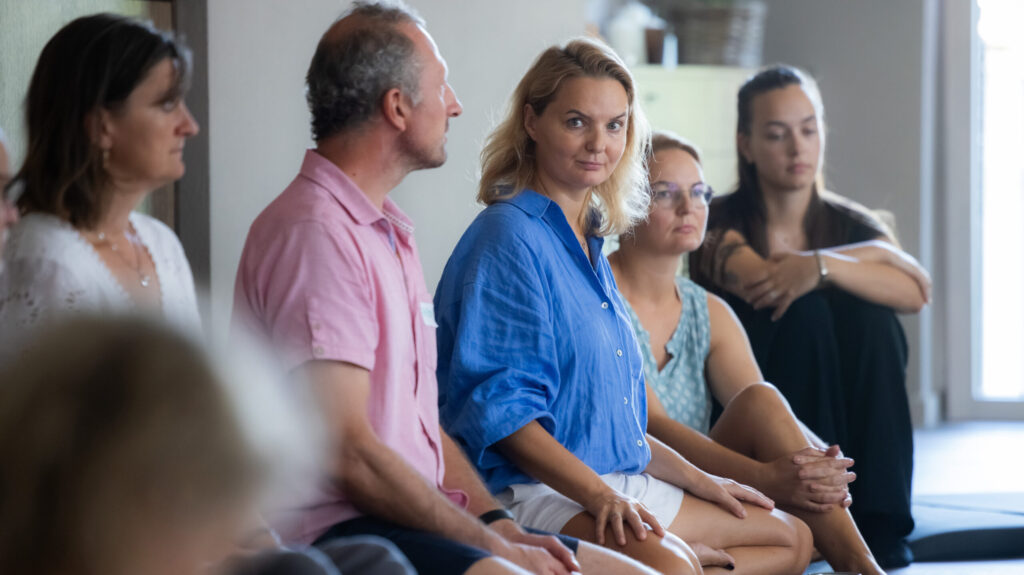
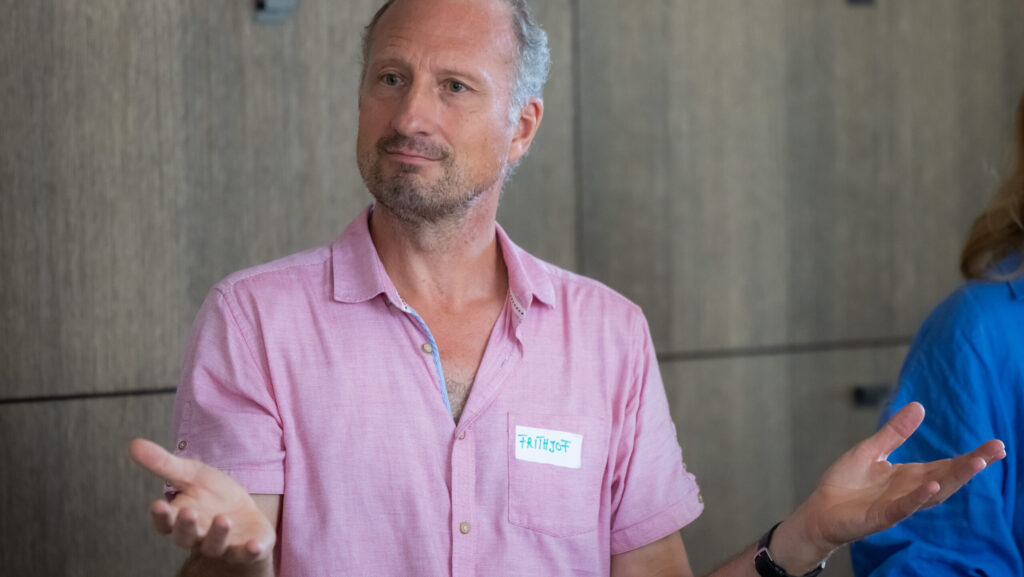
We are currently forming a new orgodynamic body psychotherapy study group. The path into the studies begins with the introductory seminar – there you will get to know the method, the lecturer Frithjof Paulig and the way we learn together, and you can decide about the four-year programme afterwards.
Next introductory seminar
21–22 November 2026 (Saturday–Sunday)
Integrative Therapy Centre, Vytenio st. 4, Vilnius
21–22 November 2026 (Saturday–Sunday)
Integrative Therapy Centre, Vytenio st. 4, Vilnius
What is orgodynamic body psychotherapy and orgonomic energy?
Orgone energy is the concept of life energy formulated by the Austrian psychoanalyst Wilhelm Reich in the 20th century. He described it as a universal “life force” pulsating both in nature and in the human body. In his work he argued that a person’s vitality and free emotional expression can be restricted by so-called emotional and physical “armour” – tensions that settle in the body over time and are linked to lived experience, suppressed emotions and a lost connection with oneself.
Reich’s approach was innovative for his time because he went beyond the boundaries of classical psychoanalysis and actively included the body in the therapeutic process. His work strongly influenced the body-oriented psychotherapy directions that emerged later.
Orgodynamic body psychotherapy is a body-oriented, multidimensional and experiential method developed at the Orgoville Institute in Germany. It brings together principles of body psychotherapy, transpersonal psychology, mindfulness, meditation and work with a person’s inner processes.
Orgodynamic training develops the ability to notice body signals, emotions and inner reactions, deepens the connection with oneself and with others, and encourages authenticity, creativity and the capacity to act more consciously in both personal and professional life.
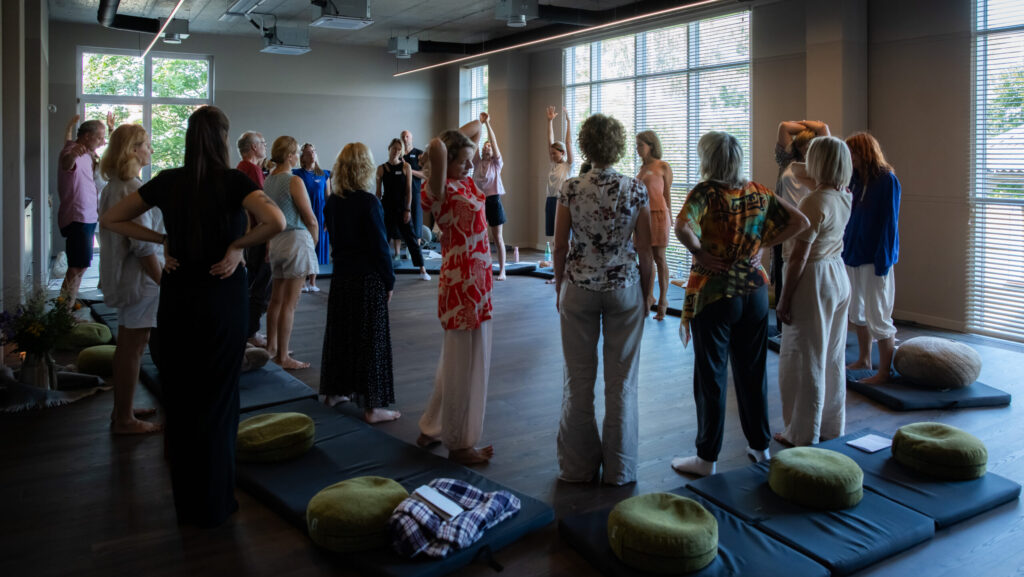
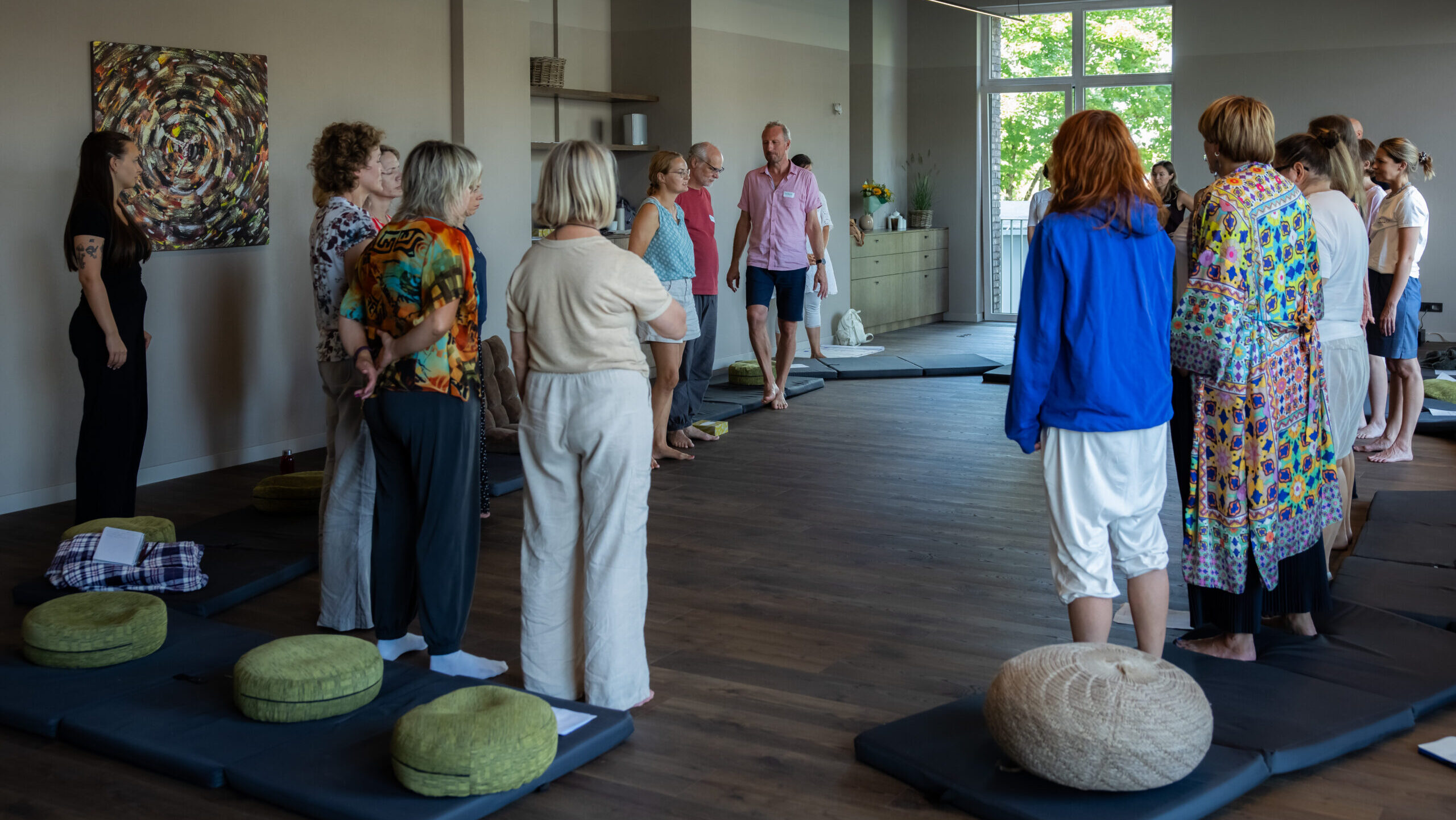
This is not a purely theoretical method. A large part of the studies is experiential – learning happens through your own body, relationship, group process, movement, attentiveness and the direct observation of your own inner processes. At the Orgoville Institute the method was developed over more than three decades by Gabrielle St. Clair and Michael Plesse.
Orgodynamics can therefore be relevant not only to psychotherapists or body therapists. Its principles can be integrated into a wide range of professional fields that work with people, their relationships, change, self-regulation or group processes.
Today orgodynamic principles are applied:
- In psychotherapy and psychological counselling – working with emotions, body reactions, inner conflicts and human experience;
- In body therapy – integrating body sensations, breathing, movement and emotional processes;
- In coaching and consulting – self-knowledge, change processes, decision-making and unfolding personal potential;
- In business, human resources and leadership – working with people, teams, relationships, communication, conflicts and group dynamics;
- In education and social work – a more conscious relationship with oneself and others, group processes and accompanying people;
- In group facilitation and supervision – understanding group dynamics, relationships and ongoing processes;
- In personal growth practices – self-knowledge, emotional opening, creativity and easing inner limitations;
- In mindfulness and spiritual practices – strengthening attentiveness, inner balance and a deeper connection with oneself.
IKTA – the Integrative Body Therapy Academy – is the only place in Lithuania where you can study the authentic orgodynamic body psychotherapy programme of the Orgoville Institute, continuing the tradition of the method as it is developed in Germany.
Key information at a glance
ℹ️ What: Orgodynamic body psychotherapy training – a continuous professional and experiential programme that grew out of Wilhelm Reich’s tradition of body psychotherapy and is further developed at the Orgoville Institute in Germany. The programme is relevant for therapists, counsellors, coaches, group facilitators, managers and professionals from other fields who work with people, as well as for those seeking deeper self-knowledge. You can choose the continuous studies in a closed group or open seminars.
ℹ️ Where: The training takes place at the Integrative Therapy Centre, Vytenio st. 4, Vilnius.
ℹ️ How: The training takes place live, in an intensive group and experiential setting. It is taught in German with translation into Lithuanian; in practical sessions it is also possible to work in English.
Individual sessions are a mandatory part of the continuous studies.
Concept
A multidimensional approach
The orgodynamic body psychotherapy method combines:
- principles of transpersonal psychology, insights from gestalt and other psychological directions;
- the practice of body psychotherapy – neo-Reichian work with the body and elements of biodynamic psychotherapy;
- models of consciousness and experience by Stephen Wolinsky and other authors;
- methods of mindfulness, meditation, contemplation and Essencia®.
During the training a safe and supportive space is created in which you can get to know yourself more deeply, experience inner change and widen your perception. You develop the ability to respond more flexibly to life situations, to sense yourself and others better, and to notice the processes taking place in relationships and in groups. The studies also involve learning to step beyond habitual patterns of thinking and behaviour and to find a more authentic relationship with yourself and the world.
The training content covers
- The key stages and themes of human life: birth, childhood, masculinity, femininity, creativity, illness, death, relationships, sexuality and spirituality.
- Therapeutic and counselling methods: accompanying processes, body sequences, massage and other experiential techniques.
- Theoretical models and literature on various topics.
- An individual process of self-exploration and the basics of professional counselling.
Mindfulness
Orgodynamic practice seeks to balance the different inner sides of a person – the ability to receive and to act, individuality and connection with others. When these sides come into balance, there is more inner freedom, aliveness and authenticity – not only as a theoretical idea, but as a state directly experienced in the body.
“You are already the one you were looking for.”
“You are already the one you were looking for.”
This attitude invites us not to strive to become someone else, but to recognise and accept more deeply what we already are.
You are welcome to read more about orgodynamics as a practice of body psychotherapy and mindfulness in this article (in Lithuanian).
What is the difference between orgodynamic and biodynamic body psychotherapy training?
Orgodynamics and biodynamics both rest on the principles of body psychotherapy, but their emphases differ:
- Orgodynamics is more oriented towards the balance of a person’s different inner sides, the perception of body and emotional processes, mindfulness and the exploration of transpersonal experience.
- Biodynamics places more emphasis on the natural rhythms of the body and on vital processes, in order to support the self-regulation of body, emotions and psyche.
In short: orgodynamics gives more attention to mindfulness, experience and the wider dimensions of a person’s inner processes, while biodynamics focuses on the natural rhythms of the body and on self-regulation.
You can read more about the similarities and differences of these body psychotherapy directions in this article (in Lithuanian)
Study programme
Introductory seminar: getting to know the method and the programme.
Programme overview
Year 1
Year 2
Year 3
Year 4
Programme authors and lecturers
Rules and conditions of participation
Certification and recognition
Orgodynamic training is recognised by DGK (Deutsche Gesellschaft für Körperpsychotherapie e.V.) as body psychotherapy training. It can also be credited towards certification by the European Association for Body Psychotherapy (EABP).
For EABP certification, a defined number of individual therapy hours has to be collected during the studies (36 individual sessions).
Orgodynamics is accredited under the Hessen Teacher Training Act (HLbG).
Documentation of the method: “Orgodynamik, Menschen multidimensional begleiten” (Klinkhardt Verlag, 2011).
How to start?
ℹ️ Where to start: You start with the introductory seminar. The next introductory seminar takes place on 21–22 November 2026 (Saturday–Sunday). There you can get to know the method, the lecturer and the learning process in practice, and decide about the continuous studies afterwards.