Orgodynamic body psychotherapy training (Orgoville Institute)

“Orgone energy is the primary cosmic energy that can be observed, measured and utilized.”
Wilhelm Reich

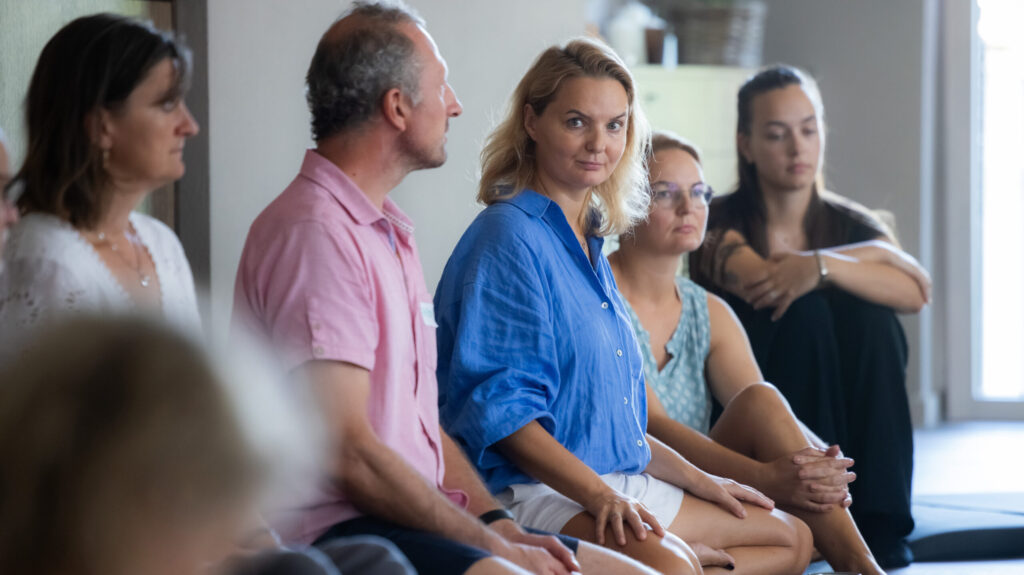
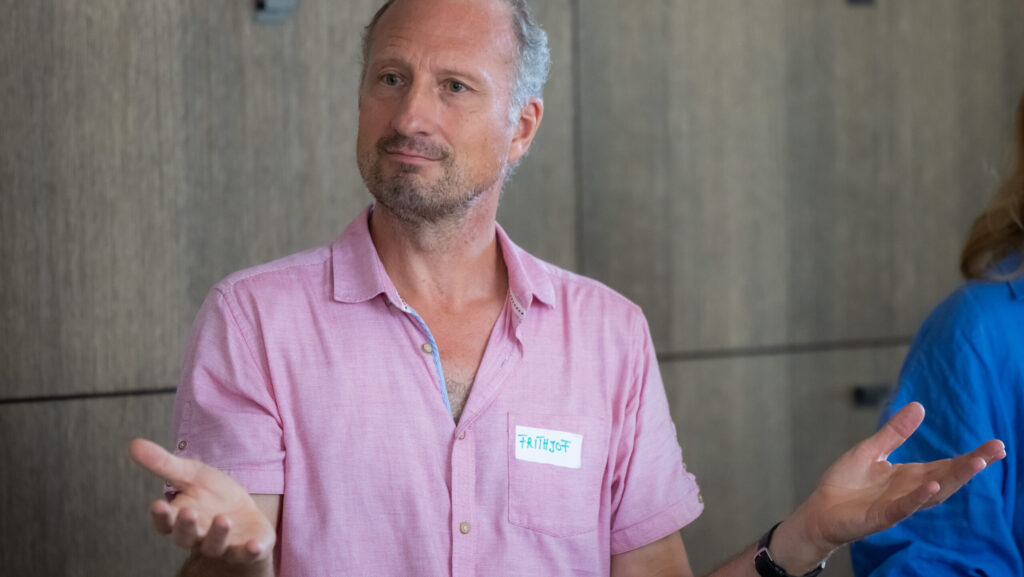
We are currently forming a new orgodynamic body psychotherapy study group. The path into the studies begins with the introductory seminar – there you will get to know the method, the lecturer Frithjof Paulig and the way we learn together, and you can decide about the four-year programme afterwards.

Next introductory seminar
21–22 November 2026 (Saturday–Sunday)
Integrative Therapy Centre, Vytenio st. 4, Vilnius

What is orgodynamic body psychotherapy and orgonomic energy?

Orgone energy is the concept of life energy formulated by the Austrian psychoanalyst Wilhelm Reich in the 20th century. He described it as a universal “life force” pulsating both in nature and in the human body. In his work he argued that a person’s vitality and free emotional expression can be restricted by so-called emotional and physical “armour” – tensions that settle in the body over time and are linked to lived experience, suppressed emotions and a lost connection with oneself.


Reich’s approach was innovative for his time because he went beyond the boundaries of classical psychoanalysis and actively included the body in the therapeutic process. His work strongly influenced the body-oriented psychotherapy directions that emerged later.


Orgodynamic body psychotherapy is a body-oriented, multidimensional and experiential method developed at the Orgoville Institute in Germany. It brings together principles of body psychotherapy, transpersonal psychology, mindfulness, meditation and work with a person’s inner processes.


Orgodynamic training develops the ability to notice body signals, emotions and inner reactions, deepens the connection with oneself and with others, and encourages authenticity, creativity and the capacity to act more consciously in both personal and professional life.


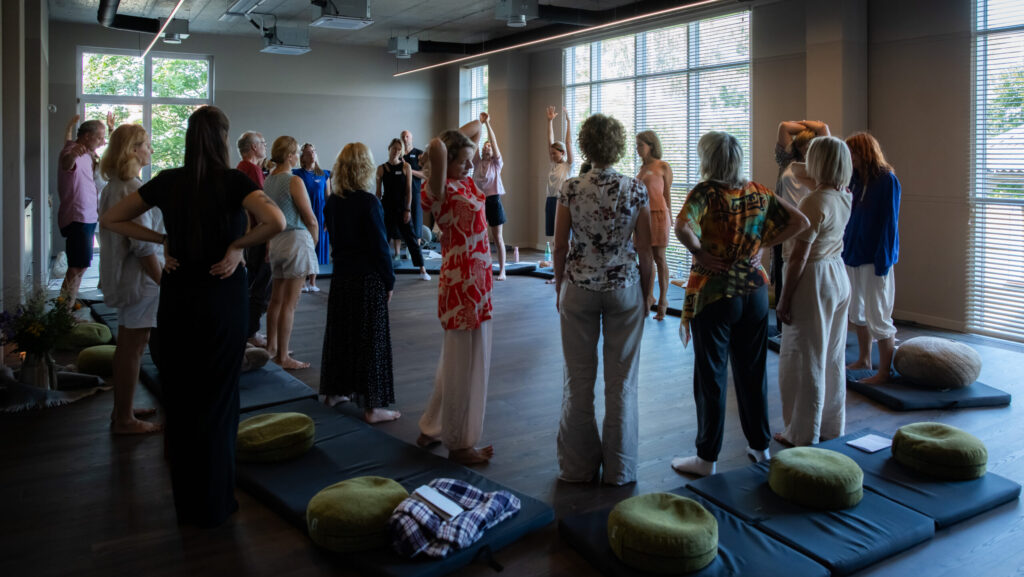
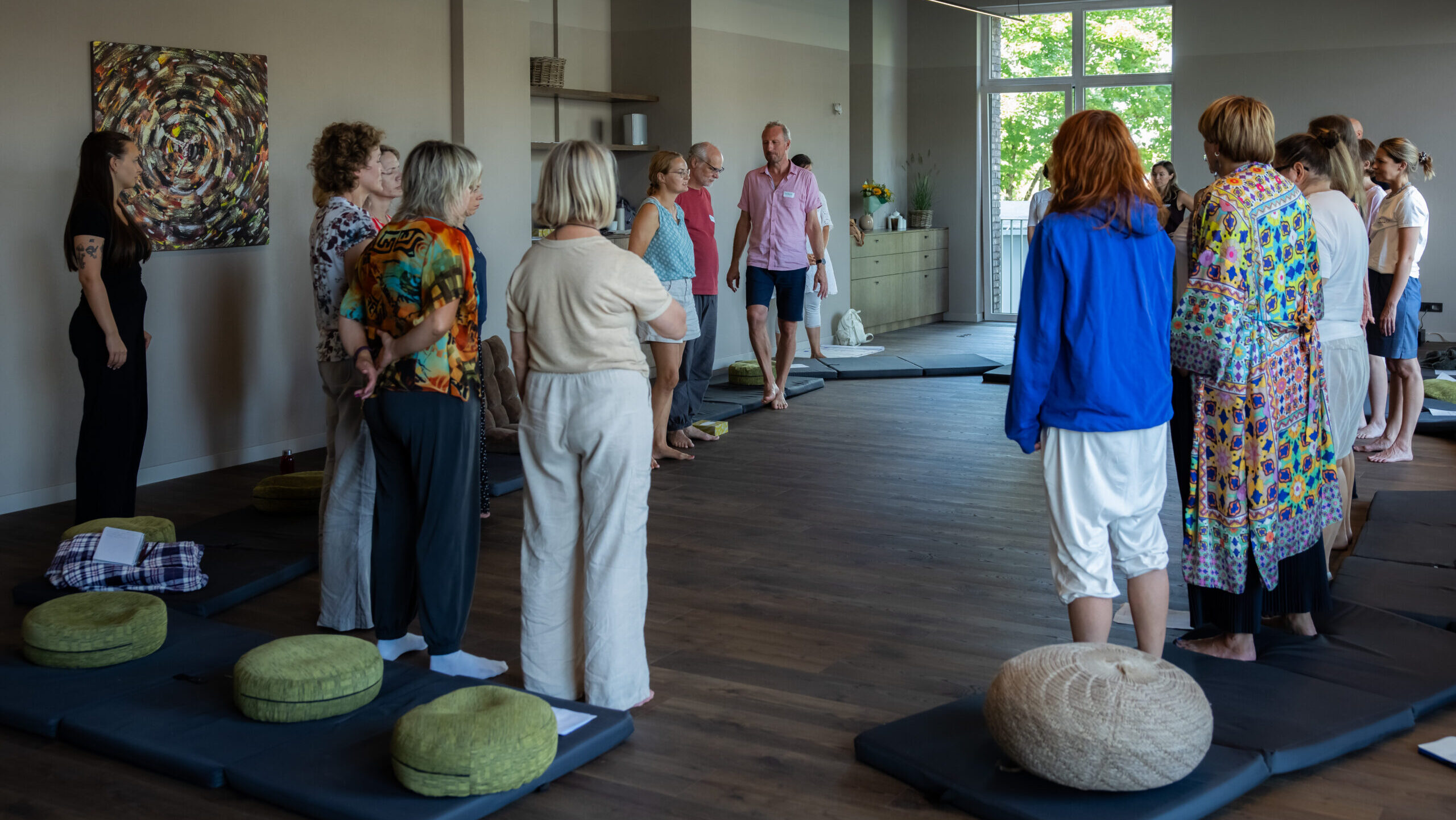
This is not a purely theoretical method. A large part of the studies is experiential – learning happens through your own body, relationship, group process, movement, attentiveness and the direct observation of your own inner processes. At the Orgoville Institute the method was developed over more than three decades by Gabrielle St. Clair and Michael Plesse.


Orgodynamics can therefore be relevant not only to psychotherapists or body therapists. Its principles can be integrated into a wide range of professional fields that work with people, their relationships, change, self-regulation or group processes.


Today orgodynamic principles are applied:

  • In psychotherapy and psychological counselling – working with emotions, body reactions, inner conflicts and human experience;
  • In body therapy – integrating body sensations, breathing, movement and emotional processes;
  • In coaching and consulting – self-knowledge, change processes, decision-making and unfolding personal potential;
  • In business, human resources and leadership – working with people, teams, relationships, communication, conflicts and group dynamics;
  • In education and social work – a more conscious relationship with oneself and others, group processes and accompanying people;
  • In group facilitation and supervision – understanding group dynamics, relationships and ongoing processes;
  • In personal growth practices – self-knowledge, emotional opening, creativity and easing inner limitations;
  • In mindfulness and spiritual practices – strengthening attentiveness, inner balance and a deeper connection with oneself.


IKTA – the Integrative Body Therapy Academy – is the only place in Lithuania where you can study the authentic orgodynamic body psychotherapy programme of the Orgoville Institute, continuing the tradition of the method as it is developed in Germany.

Key information at a glance


ℹ️ What: Orgodynamic body psychotherapy training – a continuous professional and experiential programme that grew out of Wilhelm Reich’s tradition of body psychotherapy and is further developed at the Orgoville Institute in Germany. The programme is relevant for therapists, counsellors, coaches, group facilitators, managers and professionals from other fields who work with people, as well as for those seeking deeper self-knowledge. You can choose the continuous studies in a closed group or open seminars.


ℹ️ Where: The training takes place at the Integrative Therapy Centre, Vytenio st. 4, Vilnius.


ℹ️ How: The training takes place live, in an intensive group and experiential setting. It is taught in German with translation into Lithuanian; in practical sessions it is also possible to work in English.
Individual sessions are a mandatory part of the continuous studies.
Concept

A multidimensional approach


The orgodynamic body psychotherapy method combines:

  • principles of transpersonal psychology, insights from gestalt and other psychological directions;
  • the practice of body psychotherapy – neo-Reichian work with the body and elements of biodynamic psychotherapy;
  • models of consciousness and experience by Stephen Wolinsky and other authors;
  • methods of mindfulness, meditation, contemplation and Essencia®.


During the training a safe and supportive space is created in which you can get to know yourself more deeply, experience inner change and widen your perception. You develop the ability to respond more flexibly to life situations, to sense yourself and others better, and to notice the processes taking place in relationships and in groups. The studies also involve learning to step beyond habitual patterns of thinking and behaviour and to find a more authentic relationship with yourself and the world.

The training content covers


  • The key stages and themes of human life: birth, childhood, masculinity, femininity, creativity, illness, death, relationships, sexuality and spirituality.
  • Therapeutic and counselling methods: accompanying processes, body sequences, massage and other experiential techniques.
  • Theoretical models and literature on various topics.
  • An individual process of self-exploration and the basics of professional counselling.

Mindfulness


Orgodynamic practice seeks to balance the different inner sides of a person – the ability to receive and to act, individuality and connection with others. When these sides come into balance, there is more inner freedom, aliveness and authenticity – not only as a theoretical idea, but as a state directly experienced in the body.

“You are already the one you were looking for.”

This attitude invites us not to strive to become someone else, but to recognise and accept more deeply what we already are.

You are welcome to read more about orgodynamics as a practice of body psychotherapy and mindfulness in this article (in Lithuanian).

What is the difference between orgodynamic and biodynamic body psychotherapy training?


Orgodynamics and biodynamics both rest on the principles of body psychotherapy, but their emphases differ:

  • Orgodynamics is more oriented towards the balance of a person’s different inner sides, the perception of body and emotional processes, mindfulness and the exploration of transpersonal experience.
  • Biodynamics places more emphasis on the natural rhythms of the body and on vital processes, in order to support the self-regulation of body, emotions and psyche.

In short: orgodynamics gives more attention to mindfulness, experience and the wider dimensions of a person’s inner processes, while biodynamics focuses on the natural rhythms of the body and on self-regulation.

You can read more about the similarities and differences of these body psychotherapy directions in this article (in Lithuanian)

Study programme

Introductory seminar: getting to know the method and the programme.

You will get to know the training programme, the lecturers, the environment, the teaching method and its application in therapeutic and professional practice. This seminar is a prerequisite for participating in the full four-year study programme.

Programme overview

The programme has been prepared specifically for participants in Lithuania and is concentrated into four years. Five events are planned each year, lasting from approximately 24 to 49 hours. Three main directions are interwoven in the programme:

  • 9 thematic basic modules;
  • 6 orgodynamic body therapy modules;
  • 5 supervision modules.
Additional parts of the training can be ordered separately:
  • individual consultations;
  • intensive supervision.
Five seminars are planned each year: four of them take place in Vilnius and one outside the city with an overnight stay (underlined in the programme). The seminars differ in length: the short ones last 4 days, the long ones 6 or 7 days (approx. 43–49 hours).

Year 1

  • LOrgo M1: body module: seeing, being seen and not judging (24 hours) – Friday 22.01.2027 – Monday 25.01.2027 (new group)
  • LOrgo M2: basic module: self-perception and child identity (49 hours) – Tuesday 02.03.2027 – Monday 08.03.2027 (new group)
  • LOrgo M3: body module: the healing power of expression (24 hours) – Saturday 05.06.2027 – Tuesday 08.06.2027 (new group)
  • LOrgo M4: basic module: “Who am I?” – self-awareness and mindfulness (43 hours) External – Wednesday 08.09.2027 – Sunday 12.09.2027 (new group)
  • LOrgo SV1: supervision (24 hours) – Wednesday 01.12.2027 – Saturday 04.12.2027 (new group)

Year 2

  • LOrgo M5: body module: need, aggression and the presence of the heart (24 hours) – Thursday 02.10.2025 – Sunday 05.10.2025 (first group) – the date for the new group will be confirmed
  • LOrgo M6: basic module: working with light and shadow (43 hours) – Friday 09.01.2026 – Wednesday 14.01.2026 (first group) – the date for the new group will be confirmed
  • LOrgo M7: body module: feelings, boundaries and your own strength (24 hours) – Thursday 12.03.2026 – Sunday 15.03.2026 (first group) – the date for the new group will be confirmed
  • LOrgo M8: basic module: self-worth and self-confidence (43 hours) External – Saturday 06.06.2026 – Thursday 11.06.2026 (first group) – the date for the new group will be confirmed
  • LOrgo SV2: supervision (24 hours) – Thursday 13.08.2026 – Sunday 16.08.2026 (first group) – the date for the new group will be confirmed

Year 3

  • LOrgo M9: body module: Eros and being here and now (24 hours) – Thursday 01.10.2026 – Sunday 04.10.2026 (first group) – the date for the new group will be confirmed
  • LOrgo M10: basic module: creativity and expression (49 hours) – Friday 15.01.2027 – Thursday 21.01.2027 (first group) – the date for the new group will be confirmed
  • LOrgo SV3: supervision (24 hours) – Thursday 11.03.2027 – Sunday 14.03.2027 (first group) – the date for the new group will be confirmed
  • LOrgo M11: basic module: death and dying (43 hours) External – Friday 11.06.2027 – Wednesday 16.06.2027 (first group) – the date for the new group will be confirmed
  • LOrgo M12: body module: change, transformation and YES to life (24 hours) – Thursday 02.09.2027 – Sunday 05.09.2027 (first group) – the date for the new group will be confirmed

Year 4

  • LOrgo SV4: supervision (24 hours) – Thursday 25.11.2027 – Sunday 28.11.2027 (first group) – the date for the new group will be confirmed
  • LOrgo M13: basic module: relationships and attraction (49 hours) (first group – date to be confirmed) – the date for the new group will be confirmed
  • LOrgo M14: basic module: life direction and vision, part 1 (24 hours) (first group – date to be confirmed) – the date for the new group will be confirmed
  • LOrgo M15: basic module: birth as a process of transformation (43 hours) External – (first group – date to be confirmed) – the date for the new group will be confirmed
  • LOrgo M16: basic module: life direction and vision, part 2 (24 hours) – (first group – date to be confirmed) – the date for the new group will be confirmed
  • LOrgo SV5: supervision (24 hours) – (first group – date to be confirmed) – the date for the new group will be confirmed

Programme authors and lecturers

Programme director: Frithjof Paulig

Special topics and supervision: Dr. Gabrielle St. Clair, Michael Plesse.

The training is held in German with translation. Individual practice and group work with assistants take place in German with translation or in English with translation.

Rules and conditions of participation

Prices are indicative and may be adjusted at the end of each year, taking into account the number of participants, agreements with the Orgoville Institute and the general economic situation.


Year Total training duration (hours) Annual price (EUR)
Year 1 164 3350
Year 2 158 3350
Year 3 164 3450
Year 4 188 3900


Dates are planned in advance and coordinated with the Orgoville Institute (Germany), but the organisers reserve the right to change them if necessary.


Participants commit to taking part for at least one year. If you withdraw from the programme, the annual fee is non-refundable (a corresponding contract is concluded with the German orgodynamics institute).


If a participant misses a seminar, the price of the whole year does not change. To receive the certificate, the missed material has to be covered – through individual sessions or with another group.


If seminars take place outside the city, meals and accommodation are paid additionally.

Certification and recognition

Orgodynamic training is recognised by DGK (Deutsche Gesellschaft für Körperpsychotherapie e.V.) as body psychotherapy training. It can also be credited towards certification by the European Association for Body Psychotherapy (EABP).

For EABP certification, a defined number of individual therapy hours has to be collected during the studies (36 individual sessions).


Orgodynamics is accredited under the Hessen Teacher Training Act (HLbG).


Documentation of the method: “Orgodynamik, Menschen multidimensional begleiten” (Klinkhardt Verlag, 2011).

How to start?

ℹ️ Where to start: You start with the introductory seminar. The next introductory seminar takes place on 21–22 November 2026 (Saturday–Sunday). There you can get to know the method, the lecturer and the learning process in practice, and decide about the continuous studies afterwards.
Frequently asked questions

What can I work as after completing this training?

This is professional training for people working in therapy, counselling, social work, the arts, education, management and business. On completing the programme you receive a certificate from the Orgoville Institute. Depending on the professional direction you choose and your existing basic qualification, orgodynamic methods can be integrated into your current profession, individual counselling, or work with groups and organisations.

What education is needed to study orgodynamics?

No specific prior education is required – people from various professions can study. The programme is oriented towards professional development, but it is also a deep experiential programme of self-exploration, so it can be valuable for people going through significant life changes and looking for a new direction, deeper self-knowledge or meaning.

What is the difference between an orgodynamics consultant, instructor and therapist?

These are terms describing different areas of applying orgodynamics, and they partly overlap. A consultant can work individually or in organisations, accompany change processes and advise teams. An instructor can lead groups and integrate orgodynamic methods into their own training or professional activity. The therapeutic direction is oriented towards individual work with a person and is usually linked to a corresponding basic therapeutic qualification.

How do I decide whether I want to study orgodynamics?

The next introductory seminar takes place on 21–22 November 2026 (Saturday–Sunday). During the seminar all participants can meet the lecturer directly, experience the method in practice, get to know the form of learning and only then decide about the continuous studies.

What certificate is issued on successful completion of the training?

On completing the programme a certificate from the Orgoville Institute is issued. Orgodynamic methods can be integrated into your existing professional practice, taking into account your basic education and field of professional activity.

The regulation of body psychotherapy and of its individual directions in Lithuania is currently not clearly defined.

Recognition of the certificate in Germany and Europe:
DGK (Deutsche Gesellschaft für Körperpsychotherapie e.V.) recognises orgodynamic training as body psychotherapy training. It can also be credited towards DGK and European Association for Body Psychotherapy (EABP) body psychotherapy certification.

Orgodynamics is accredited under the Hessen Teacher Training Act (HLbG).

Do we work through physical contact in orgodynamics?

In orgodynamic methods, mindfulness, perception, presence, observing body sensations and meditative practices are essential. Direct physical touch may be used in some practices, but it is not the main emphasis of the method.

If I missed a seminar, would it be possible to acquire the missed knowledge in individual consultations? As I understand it, I would have to pay extra in that case?

Our courses are organised in cooperation with the German Orgoville Institute and its lecturers, and they are continuous. If you miss one seminar, the annual price of the studies is not reduced. A large part of the training is experiential and connected with being in the group. Within one year you can miss no more than one seminar and compensate for it with individual sessions: a short seminar requires 6 separate sessions, a long seminar 12 individual sessions. Individual sessions are paid separately.

Does the training fee have to be paid for the year in advance? Is it possible to pay in instalments before each module?

Yes, it is also possible to pay in instalments. If you choose payment in instalments, a small additional administrative fee may apply.

Are any special prerequisites needed to take part in the training?

No special prior knowledge is needed. Sincere interest, a wish to get to know yourself and openness to new experiences are enough.

Is orgone energy scientifically recognised?

The existence of orgone energy as a separate kind of physical energy is not recognised by contemporary science. However, some of Wilhelm Reich’s ideas about the interaction of body and psyche, chronic muscular tension and the bodily expression of emotions had a significant influence on the body psychotherapy directions that formed later.